

Doctor or Chiropractor After a Car Accident?
A chiropractic adjustment moves a joint. It can’t show anyone whether the vertebra under that joint cracked in the crash, or whether a disc is now pressing on a nerve. That gap answers a question you may face when you’re thinking about a chiropractor after a car accident: who do you see first?
Start with a physician’s evaluation, then bring chiropractic care in as part of one coordinated plan. At Orthopedic Spine & Injury Center (OSIC), our physician-led team evaluates you first, then coordinates chiropractic care through a referral or with the chiropractor you already see. We do this for people hurt in crashes across the Boise Metro area. Relax. You don’t have to sort this out on your own.
Table of Contents
- Should You See a Chiropractor or a Doctor After a Car Accident?
- What a Physician’s Evaluation Rules Out Before an Adjustment
- Where Chiropractic Care Fits in a Conservative-First Plan
- How Soon Can You Start Chiropractic Care After a Car Accident?
- Why Early Documentation of an Injury Matters
- What to Expect When Your Care Team Shares One Plan
- Start Your Recovery With an Evaluation in Meridian
- Frequently Asked Questions
Should You See a Chiropractor or a Doctor After a Car Accident?
See a physician first. A medical evaluation, with imaging when your symptoms call for it, can rule out fractures, disc injuries, and nerve damage that need a diagnosis before hands-on treatment starts. Once a physician clears those, chiropractic care can be a strong part of your recovery, alongside physical therapy and pain management in one conservative-first plan.
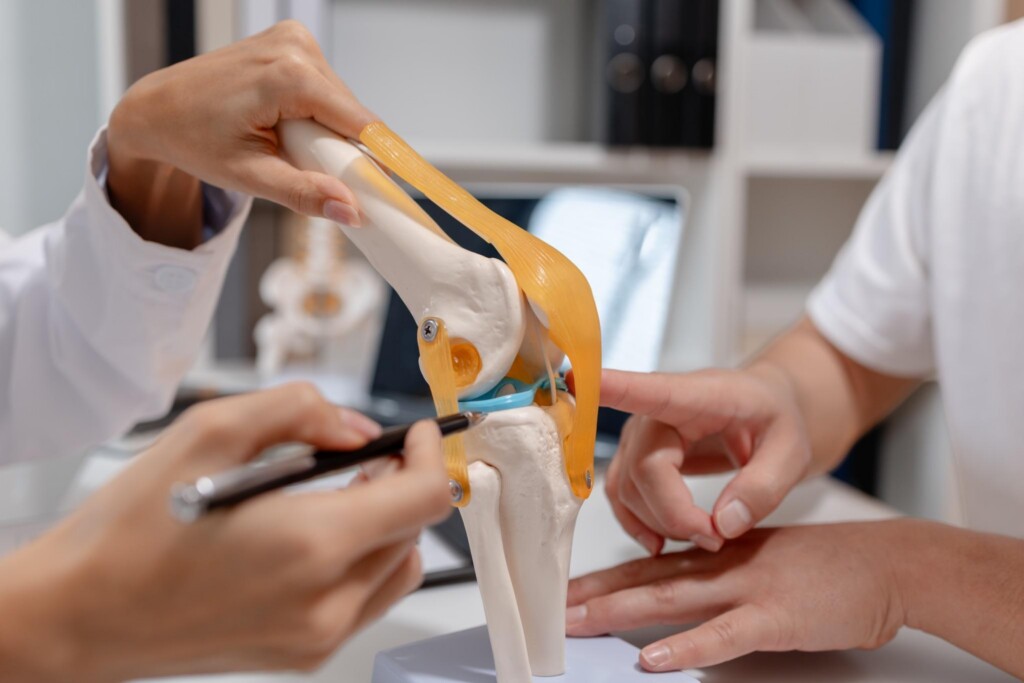
The two roles cover different ground. A chiropractor focuses on how your spine and joints move and uses hands-on techniques such as spinal manipulation (a quick, controlled push on a joint) to restore motion and ease pain. A physician’s first job after a crash is diagnosis: finding every injury, including the ones that don’t hurt much yet. If you’re stuck on the car accident chiropractor or doctor question, the answer for most people is both, in the right sequence.
| Physician evaluation | Chiropractic care | |
|---|---|---|
| Main job after a crash | Diagnose every injury and rule out serious ones | Restore joint motion and ease pain from soft-tissue injuries |
| Common tools | Physical and neurological exam, X-ray, MRI, nerve testing, medication and injections when needed | Spinal manipulation, mobilization, soft-tissue work, home exercises, and X-rays in many offices |
| When it fits | First, within a few days of the crash | After serious injuries are ruled out |
| What it records | A diagnosis and treatment plan tied to the crash | Visit-by-visit treatment and progress |
What a Physician’s Evaluation Rules Out Before an Adjustment
A physician’s evaluation looks for injuries that change what treatment is safe: fractures, herniated discs pressing on a nerve, nerve damage, torn ligaments, and concussion. Some of these hurt less than you’d expect at first. Finding them before hands-on spinal treatment starts protects you and gives your care team an accurate starting point.
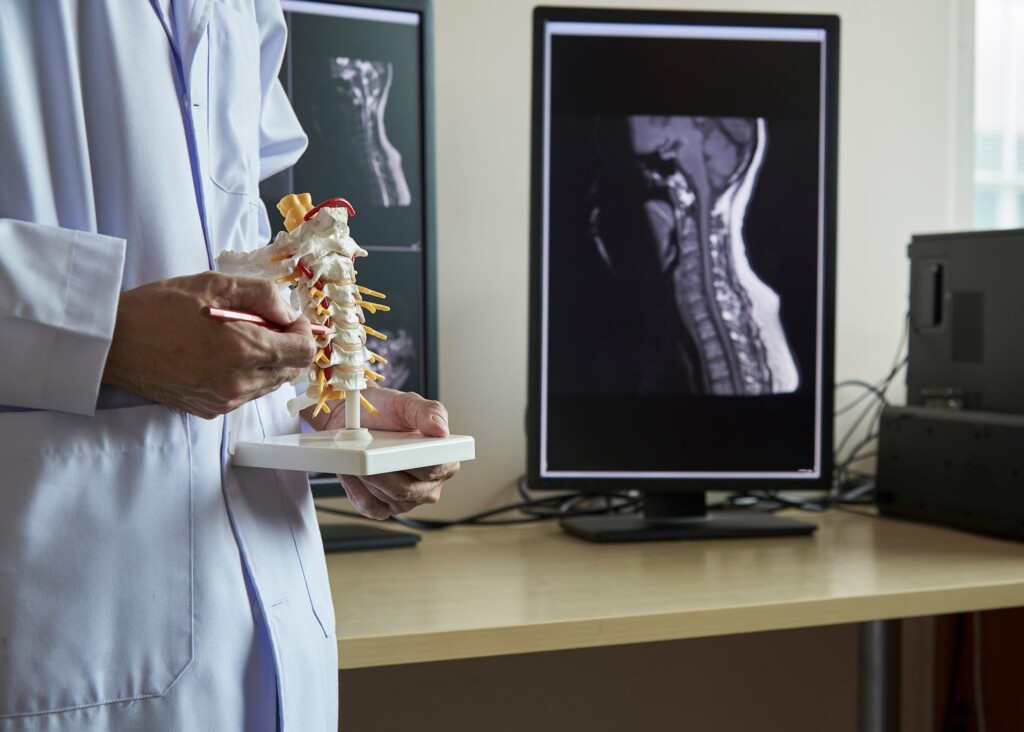
- Fractures. A cracked vertebra can hide behind ordinary soreness, especially in the neck. Putting force through an unstable spine can make a fracture worse, so a physician checks for one first.
- Disc injuries. A disc that bulges or ruptures in a crash can press on a spinal nerve and send pain, numbness, or tingling into an arm or leg. An MRI shows the disc. An X-ray doesn’t.
- Nerve problems. EMG and NCS testing (electromyography and nerve conduction studies, two separate tests) measure the electrical activity in your muscles and how well your nerves carry signals, which helps pinpoint a pinched or injured nerve.
- Ligament damage. The ligaments that hold your vertebrae together can stretch or tear. A standard X-ray can’t show the ligament itself, so a physician may order an MRI, or X-rays to rule out a fracture or instability.
- Concussion. A crash can injure the brain without any blow to the head. A headache, fogginess, or dizziness after an accident calls for a physician’s exam before anything else.
Emergency physicians use screening tools such as the Canadian C-Spine Rule, published in JAMA, to decide which alert, stable trauma patients need neck imaging. Under that rule, being 65 or older, a dangerous mechanism such as a high-speed or rollover crash, or tingling in the arms or legs points toward imaging. At OSIC, our full-service diagnostics include digital X-ray, MRI coordination, and EMG/NCS nerve testing, so your exam and your imaging stay coordinated by one team.
Warning Signs That Need Emergency Care
Call 911 or go to the nearest emergency room if you notice any of these after a crash:
- New weakness or numbness in your arms or legs
- Loss of bladder or bowel control, or numbness around the groin
- A headache that keeps getting worse, repeated vomiting, or confusion
- Slurred speech, vision changes, or sudden trouble with balance
- Severe neck pain after a high-speed or rollover crash
These can signal a spinal cord injury, bleeding in the brain, or an injured artery in the neck. They need emergency care before any clinic visit.
Where Chiropractic Care Fits in a Conservative-First Plan
Once a physician rules out serious injuries, chiropractic care can help restore motion and ease pain from soft-tissue injuries like whiplash and low back strain. OSIC’s physicians build and coordinate the plan, and chiropractic care comes through a referral or from your current chiropractor, alongside physical therapy and pain management. For most patients, surgery is the last resort.

Whiplash is a good example. OrthoInfo, the patient site of the American Academy of Orthopaedic Surgeons, describes it as an injury caused by the neck whipping rapidly back and forth, commonly seen after rear-end collisions. OrthoInfo lists physical therapy and exercise among the treatments for a neck sprain. Chiropractic care, physical therapy, and a home exercise program can each play a part, and your plan may lean on one more than another depending on what your evaluation found.
NCCIH, the National Center for Complementary and Integrative Health, reports that spinal manipulation can be helpful for acute neck pain. For acute low-back pain, NCCIH reports that spinal manipulation is associated with a modest improvement in pain, similar to the benefit from nonsteroidal anti-inflammatory drugs (NSAIDs).
On safety, NCCIH reports that mild side effects such as temporary soreness, stiffness, or headache are common after spinal manipulation and usually fade within 24 hours. Serious complications, including strokes involving arteries in the neck, have been reported but are very rare. NCCIH also notes that sudden neck movement, including whiplash itself, may increase the risk of tears in a neck artery. That’s one reason we want a physician to evaluate your neck before hands-on treatment begins.
What to Expect From Chiropractic Care After a Crash
A chiropractor starts by examining how your spine and joints move, then picks techniques to match. Along with spinal manipulation, many use mobilization, a slower, gentler technique that moves a joint through its range. Soft-tissue work and exercises you do at home often round out the visits.
To get the most from your chiropractic care:
- Bring your records. Share your evaluation, diagnosis, and any imaging results so your chiropractor treats the injury your physician found.
- Report every symptom. Mention numbness, tingling, headaches, or dizziness, even if they seem minor.
- Keep a symptom log. A few notes after each visit on pain, stiffness, and sleep show your care team what’s changing.
- Speak up about soreness. Tell your physician if soreness after a session lasts longer than a day or gets worse.
Your physician checks those notes at each re-evaluation and changes the plan if you aren’t improving.
How Soon Can You Start Chiropractic Care After a Car Accident?
Get a physician’s evaluation within a few days of the crash, even if you feel mostly fine, and go to an emergency room right away for any of the warning signs above. Chiropractic care can start once that evaluation clears you for hands-on treatment. Some patients begin within days, while others wait for an injury to settle first.

OrthoInfo notes that pain from a neck sprain may not appear until hours after the injury, or even the next day, and advises seeing a doctor for an evaluation even if you feel fine. That delay catches people off guard after a fender-bender on Eagle Road or a higher-speed collision on I-84. OSIC offers same-day appointments for urgent injuries whenever possible.
If you’re already seeing a chiropractor after a car accident and haven’t had a medical evaluation, you can still get one. We work with chiropractors who refer accident patients to us for medical evaluation and imaging, and your chiropractic care can continue as part of the plan.
Why Early Documentation of an Injury Matters
Early documentation creates a medical record that connects your injuries to the crash from the start. A physician’s notes, imaging results, and diagnosis show what was injured and when it was found. If you have a personal-injury claim, a long gap between the accident and your first evaluation can raise questions about what caused your symptoms.
Good records also help your recovery, since your physician, chiropractor, and physical therapist can all work from the same diagnosis. Our medical-legal services, including Medical Legal Evaluations and Life Care Planning, build on those same records. We treat and we document, and the legal decisions belong to you and your attorney. Your personal injury lawyer is always the best source of any and all advice and information regarding your legal case.
What to Expect When Your Care Team Shares One Plan
When your care team shares one plan, your physician and every provider treating you work from the same diagnosis and the same record. You tell your story once. Our concierge support team handles scheduling and keeps everyone updated, and your plan changes as your progress shows what’s working.

Our medical director, Dr. Phil Davidson, is a board-certified orthopedic surgeon with more than twenty years’ experience treating injury patients, and he leads a team of dozens of specialized practitioners. Through our integrated, patient-centered approach, those specialists share your case instead of handing you off.
Five Steps From Crash to Coordinated Care
- Physician evaluation. A physician reviews how the crash happened, examines your spine and joints, and checks your nerves and reflexes.
- Diagnostics when needed. X-ray, MRI, or EMG/NCS nerve testing confirms what the exam suggests.
- One written plan. Your team sets the order of care, whether that’s chiropractic care, physical therapy, pain management, or a mix.
- Conservative treatment. Hands-on care and guided exercise come first, with injections or other pain management when pain limits your progress.
- Re-evaluation. Your physician checks your progress at set points and adjusts the plan, including a referral to a spine or orthopedic specialist if an injury isn’t responding.
When Chiropractic Care Isn’t the Right Fit
Some injuries call for a different path. A fracture may need bracing and a spine or orthopedic specialist’s care. A disc pressing hard on a nerve may point toward pain management or targeted injections. A concussion calls for our brain injury and concussion care program before hands-on spinal care. If conservative care stops making progress, a spine or orthopedic surgeon who already knows your case can review it with you. Even then, for most patients, our team exhausts non-surgical options first.
Start Your Recovery With an Evaluation in Meridian
If you were hurt in a crash anywhere in the Boise area, start with an evaluation. Our Meridian clinic at 3080 East Gentry Way, Suite 200, serves Boise, Nampa, Caldwell, and the rest of the Treasure Valley. Our team will examine your injuries, explain what we find, and coordinate chiropractic care when it fits.
We are physician-led and 100% dedicated to accident injuries, and there may be no out-of-pocket treatment options for qualifying injury cases. To get clarity about your condition and next steps, request an appointment or call our Idaho team at 208-278-2300. Outside Idaho? We also have clinics in Utah, Washington, and the Vancouver-Portland metro.
Frequently Asked Questions
Do I need a referral to see a chiropractor after a car accident?
Many people can book a chiropractor without one, but after a crash we recommend starting with a physician’s evaluation. It checks for fractures, disc injuries, and nerve problems before hands-on care begins. If chiropractic care fits your plan, our team refers you to a chiropractor or coordinates with the one you already see, so everyone works from the same diagnosis.
How many chiropractic visits will I need after a car accident?
It depends on your injury and how you respond to care. Some soft-tissue injuries improve over a few weeks of visits, while others need a longer plan. Your physician sets the starting plan with your chiropractor and re-evaluates your progress at set points. If you aren’t improving, the plan changes instead of simply adding more visits.
Can I see a chiropractor and a physical therapist at the same time?
Yes, many patients do. Chiropractic care focuses on how your joints move, and physical therapy builds strength and control, so the two often work well together. Your physician decides the mix and the order, and our “concierge” team helps keep both providers working from the same plan so your visits support each other.
Should I still see a doctor if I feel better after a few chiropractic visits?
Yes, keep your follow-up evaluations. Feeling better is a good sign, but some injuries, like a disc problem or a concussion, can linger without much pain. A physician’s re-evaluation confirms how you’re healing and keeps your medical record complete. If you have a personal injury claim, your attorney is the best source of advice on how your records fit your case.