


Car Accident Injury Treatment in Idaho: A Complete Guide to Your Recovery
The crash is over, the tow truck has come and gone, and now you are sitting at home wondering why your neck feels worse than it did at the scene. Maybe a headache has settled in. Maybe your lower back tightens every time you stand up. You are not sure whether this is something that will fade on its own or something that needs a doctor. Relax. Breathe. You have landed in the right place.
At Orthopedic Spine & Injury Center (OSIC), we treat accident injuries and nothing else. This page walks you through car accident injury treatment from the first hours after a crash to the point where you feel like yourself again: the injuries car accidents tend to cause, why some of them hide for days, what a real evaluation looks like, and the order in which our physicians actually treat you. Our team is 100% dedicated to accident injuries, and everything below reflects how we care for injured people across the Boise Metro area and the rest of Idaho.
Table of Contents
- What Is Car Accident Injury Treatment?
- The Injuries Car Accidents Cause Most Often
- Why Some Symptoms Take Days to Appear
- What Happens When You See a Car Accident Doctor
- Conservative-First Treatment: What Doctors Try Before Surgery
- How Care Gets Coordinated Across Specialists
- Treatment When You Have a Personal-Injury Claim
- Getting Car Accident Injury Treatment Across Idaho
- Schedule Your Injury Evaluation in Meridian
- Frequently Asked Questions
What Is Car Accident Injury Treatment?
Car accident injury treatment is medical care aimed specifically at the injuries a crash causes: the spine, muscles, joints, nerves, and brain. It starts with a physician-led evaluation to find every injury, then moves to a plan that relieves pain and restores function. Good treatment is coordinated, conservative first, and documented from day one.
The phrase covers a wide range of care because a crash affects the whole body at once. A single collision can strain the neck, bruise a knee against the dash, and rattle the brain inside the skull. Treating one injury while missing the others leaves you hurting, so our physicians look at the full picture before recommending anything. We treat people hurt in car, rideshare, motorcycle, truck, bicycle, pedestrian, and slip-and-fall accidents.
The Injuries Car Accidents Cause Most Often
Car accidents most commonly cause whiplash and other neck injuries, back and spine injuries, concussions and other brain injuries, and joint injuries to the shoulders, knees, wrists, and hips. The forces in even a low-speed crash exceed what the body is built to absorb, so soft tissue, bone, nerves, and brain tissue all take the impact.

More than two million people are injured in U.S. traffic crashes every year, according to the National Highway Traffic Safety Administration. Here is how the most frequent crash injuries break down, along with the kind of care each usually needs first.
| Injury | What it is | Typical first-line care |
|---|---|---|
| Whiplash | A rapid back-and-forth motion that strains the neck’s muscles and ligaments | Physical therapy, targeted exercises, pain management |
| Back and spine injuries | Strained muscles, disc injuries, or nerve irritation along the spine | Physical therapy, chiropractic care, injection therapy when needed |
| Concussion | A jolt to the brain that disrupts how it works, even without a direct blow to the head | Rest, symptom monitoring, a supervised return-to-activity plan |
| Joint injuries | Damage to the shoulder, knee, wrist, or hip from bracing or impact | Imaging, physical therapy, bracing, injections before any surgery |
Whiplash and neck injuries. Whiplash happens when a crash snaps your head forward and back faster than your neck can control. The result is strained muscles and ligaments, stiffness, and headaches, which OrthoInfo from the American Academy of Orthopaedic Surgeons classifies as a soft-tissue neck injury. You can learn more on our whiplash and neck injury pages.
Back and spine injuries. The lower back absorbs a large share of crash energy. Some people walk away with a muscle strain that heals in weeks; others have a disc injury pressing on a nerve, which needs a closer look. Our spine injury resources explain the range.
Concussions and brain injuries. A concussion is a mild traumatic brain injury, and you do not have to hit your head to get one. According to the CDC, motor vehicle crashes are the second most common cause of hospital stays for traumatic brain injury, after falls. The CDC also notes that concussion symptoms can appear right away or hours to days later. Our brain injury and concussion care program evaluates and treats these injuries directly.
Joint injuries. Shoulders, knees, wrists, and hips get hurt when you brace against the wheel or strike the interior. These injuries often respond well to non-surgical care when they are caught early.
Why Some Symptoms Take Days to Appear
Some car accident symptoms show up days later because adrenaline masks pain at the scene, and because strained soft tissue swells gradually over the next 24 to 72 hours. Whiplash stiffness and concussion symptoms in particular often surface a day or two after the crash, which is why feeling fine on the first day does not mean you are uninjured.

The chemistry is straightforward. In a crash your body floods with adrenaline, which blunts pain so you can handle the emergency. Once that wears off, the injury underneath becomes noticeable. Inflammation follows the same delay: a strained muscle or ligament swells over hours, and the soreness peaks later. Brain injuries can be even quieter, since a person may feel dazed at first and only notice worsening headaches, light sensitivity, or trouble concentrating over the following days.
This delay is the reason we tell people to get evaluated even when they feel okay. A proper evaluation early gives you answers before a hidden injury has weeks to worsen. It also creates a clear medical record from the start, which matters if you are dealing with a personal-injury claim.
What Happens When You See a Car Accident Doctor
When you see a car accident doctor at OSIC, a physician reviews how the crash happened, examines you head to toe, and orders any imaging or nerve testing your symptoms call for. The goal is to identify every injury, not just the loudest one, and to build a treatment plan the same day whenever possible. You leave with clarity about your condition and next steps.
Our evaluations are physician-led because accident injuries hide behind one another, and it takes medical training to sort them out. Dr. Phil Davidson, our medical director, is a board-certified orthopedic surgeon with more than twenty years treating injury patients, and he leads a team of dozens of specialized practitioners.
A first visit usually includes a detailed history of the crash and your symptoms, a physical exam of the spine and affected joints, and diagnostics when they are warranted. Our full-service diagnostics include digital X-ray, MRI coordination, and separate EMG and NCS tests, so we can see soft-tissue and nerve injuries that a basic exam might miss. When urgent injuries need attention, we offer same-day appointments whenever possible.
Conservative-First Treatment: What Doctors Try Before Surgery
Conservative-first treatment means that, for most patients, our physicians exhaust non-surgical options before ever discussing surgery. Physical therapy, chiropractic care, pain management, and injection therapy can resolve many crash injuries without an operation. Surgery is usually the last resort, considered only after conservative care has been given a real chance to work.
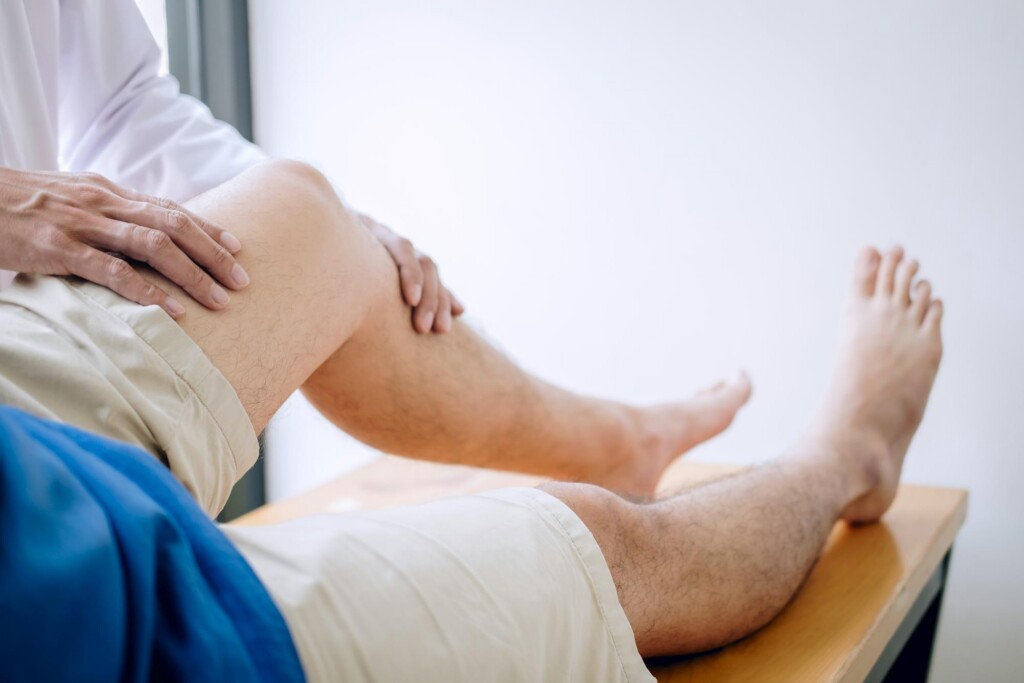
This order matters, and we hold to it. Many people hurt in a car accident recover with a well-run non-surgical plan, so that is where we start. A typical progression looks like this:
- Physical therapy and guided movement, through a provider we refer you to and coordinate with, to rebuild strength and range of motion in the neck, back, or injured joint.
- Chiropractic and manual care, through a referral we coordinate, for spinal alignment and mobility when appropriate.
- Pain management to keep you comfortable enough to participate in your own recovery.
- Injection therapy for targeted relief when pain limits progress.
For most patients, our surgeons discuss a surgical option only when these steps have been tried and the injury requires it. Even then, the conversation is about what helps you get back to your pre-injury life, not about rushing to an operating room. Our approach to comprehensive care is built around that patience.
How Care Gets Coordinated Across Specialists
Care gets coordinated at OSIC through an integrated, patient-centered team and a dedicated concierge support staff. When your injuries touch several specialties, your spine physician, orthopedic surgeon, physical medicine team, and brain-injury specialists share one plan and one record, so you are not left stitching together separate providers on your own.
A crash rarely respects the boundaries between medical specialties. You might need a spine physician for your neck, an orthopedic specialist for your knee, and our concussion program for your head, all at once. Handling that alone means repeating your story at every office and hoping the plans line up. Our coordinated specialty care removes that burden by putting the specialists on the same team, with a support staff that helps you schedule, get to appointments, and understand each step. Don’t worry. We’ve got you.
Treatment When You Have a Personal-Injury Claim
If your crash involves a personal-injury claim, OSIC treats qualifying patients on a lien or letter-of-protection basis, which means there may be no out-of-pocket treatment options while your case is pending. We also document your injuries in detail, since a clear medical record supports both your recovery and your claim.
Many people hurt in an accident worry about how they will pay for care before a claim settles. For qualifying cases, the lien model lets you get treatment now and resolve payment through your claim later. Our medical-legal services include medical legal evaluations, medical experts, and life care planning, all grounded in the same detailed documentation.
One thing we are careful about: we treat, we document, and we stay in our lane on the legal side. Your personal injury lawyer is always the best source of any and all advice and information regarding your legal case.
Getting Car Accident Injury Treatment Across Idaho
Idaho patients can receive car accident injury treatment at our Meridian clinic, which serves Boise, Meridian, Nampa, Caldwell, and communities across the Treasure Valley. Idaho’s mix of interstate driving on I-84 and higher-speed rural highways produces the kind of crashes that cause spine, orthopedic, and brain injuries, and our team treats all of them.

Our Idaho clinic sits at 3080 East Gentry Way, Suite 200, in Meridian, and you can reach it at 208-278-2300. Whether your crash happened on the interstate near Boise, on a county road outside Nampa, or in a parking lot in Meridian, the care is the same: a physician-led evaluation, a conservative-first plan, and a team that coordinates everything for you. You can see what to expect on our Idaho page and read real patient experiences on our success stories page.
Schedule Your Injury Evaluation in Meridian
If you were hurt in a crash anywhere in the Boise Metro area, the most useful next step is simple: get clarity about your condition and treatment plan. Our team will evaluate your injuries, explain what we find, and build a plan designed to help you get back to your life.
Request an appointment, or call our Meridian clinic directly at 208-278-2300. If you would rather ask a question first, reach us through our contact page. We are dedicated to accident injuries, and we would be glad to help you.
Frequently Asked Questions
How soon should I see a doctor after a car accident?
See a doctor within a few days of any car accident, even if you feel fine. Adrenaline and gradual swelling hide many crash injuries at first, and whiplash or concussion symptoms often appear a day or two later. An early evaluation can catch hidden injuries and creates a medical record from the start.
Do I need treatment if I feel okay after the crash?
Often, yes. Feeling okay right after a crash does not rule out injury, because adrenaline masks pain and soft-tissue swelling builds over the next one to three days. A physician-led evaluation can identify an injury before it worsens, which is why we recommend getting checked even when your symptoms seem mild.
Will I need surgery for a car accident injury?
Usually not. Most car accident injuries heal with conservative care such as physical therapy, chiropractic care, pain management, and injections. At OSIC, surgery is the last resort for most patients, discussed only after non-surgical treatment has been given a real chance to work and your injury requires it.
How much does car accident injury treatment cost if I have a claim?
For qualifying patients with a personal-injury claim, OSIC treats on a lien or letter-of-protection basis, so there may be no out-of-pocket treatment options while your case is pending. Your personal injury lawyer is the best source for any advice about your legal case and how payment is handled.
What kinds of accidents does OSIC treat?
We treat injuries from car, rideshare, motorcycle, truck, bicycle, pedestrian, bus, slip-and-fall, and dog-bite accidents. We are 100% dedicated to accident injuries. We do not treat workplace or workers’ compensation injuries, and we do not bill health insurance for these services.
Where is your Idaho clinic located?
Our Idaho clinic is at 3080 East Gentry Way, Suite 200, in Meridian, ID 83642, serving Boise, Meridian, Nampa, Caldwell, and the wider Treasure Valley. You can reach the clinic at 208-278-2300 to ask a question or request an injury evaluation.