

Injury Patient Report – Life Care Planning
We are excited to introduce you to a transformative approach to patient-centered care: Life Care Planning.
Life Care Planning offers a solution that goes beyond immediate treatments, creating a roadmap to support patients throughout their lifetime, not just during their immediate recovery.
At OSIC, we incorporate Life Care Planning to enable individuals to achieve the highest quality of life, prevent complications, maximize functionality, and alleviate pain and suffering.
In this edition of the OSIC Injury Patient Report, Dr. Wayne Stokes, CLP shares:
- What is Life Care Planning?
- How does OSIC approach Life Care Planning?
- Who is a good candidate for Life Care Planning?
We are fortunate to have the support of Dr. Wayne Stokes, a Certified Life Care Planning expert, to work with our patients here at OSIC.
What is Life Care Planning?
Building a Comprehensive Document
Life Care Planning (LCP) creates a document that comprehensively describes the diagnoses, medical conditions, and care requirements of injured individuals with permanent or chronic medical conditions.
The plan includes a detailed history of the injury, a comprehensive record and imaging review, a detailed interview, and a comprehensive physical exam as indicated.
Understanding Lifetime Costs
The plan will outline all relevant diagnoses, make causality statements for each diagnosis, outline comprehensive algorithmic future care, and quantify the costs of supplying the needed services, both in terms of medical/surgical care and personal/household needs through the injured individual’s life.
The goal of an LCP is to create a comprehensive medical/legal document that outlines in detail the requirements and costs to restore the injured individual to the highest quality of life, prevent complications, reach their maximum level of function, and decrease pain and suffering. (American Academy of Physician Life Care Planners).
What is Involved in Life Care Planning?
Validated methodology is utilized to formulate the LCP following the established tenets of the American Academy of Physician Life Care Planners and International Commission on Health Care Certification Life Care Planning Guidelines. Our Life Care Planning methodology addresses various essential aspects, including:
- Physician Services: Detailed medical assessments and ongoing consultations are provided to monitor the patient’s condition and adapt the care plan accordingly.
- Routine Diagnostics: Regular diagnostic tests are recommended to track the patient’s progress and identify any potential complications.
- Rehabilitation Services: Tailored rehabilitation programs are devised to optimize the patient’s functionality and help them regain independence.
- Nursing & Attendant Care: Adequate nursing and attendant care are arranged to ensure patients receive continuous support and assistance.
- Laboratory Studies: Necessary laboratory studies are conducted to monitor the patient’s health and adjust treatments as needed.
- Medications, Equipment & Supplies: We ensure that patients have access to the required medications, assistive devices, and medical supplies essential for their well-being.
- Environmental Modifications & Essential Services: Home modifications and essential services are considered to create a safe and supportive living environment for the patient.
How Does OSIC Approach Life Care Planning?
Understanding Patients’ Needs Across Their Entire Lifespan
We believe that Life Care Planning is a collaborative effort involving healthcare professionals, legal experts, and caregivers to create a tailored and holistic care plan.
Defensible Medical Opinions
As a Physical Medicine and Rehabilitation physician, I understand the needs of patients in the context of their injury regarding the need for future care and planning across their lifetime. I create medical opinions that are accurately and definitively formulated and can and will provide support for my plan and testimony as needed.
Advantages of EMDR
An important advantage of EMDR for OSIC patients is that relief can be experienced by patients quickly, and patients can resolve the symptoms of post-traumatic stress disorder in relatively few sessions.
Another advantage of EMDR for OSIC patients is that they can experience a positive understanding of themselves amid a difficult and traumatic experience through the reprocessing aspect of EMDR treatment.
A therapist who administers EMDR to patients must be well-trained and certified in EMDR for patients to receive benefits.
PHYSICIAN HIGHLIGHT
Wayne Stokes, MD
Board Certified Physical Medicine and Rehavilitation
Certified Life Care Planner, CLCP
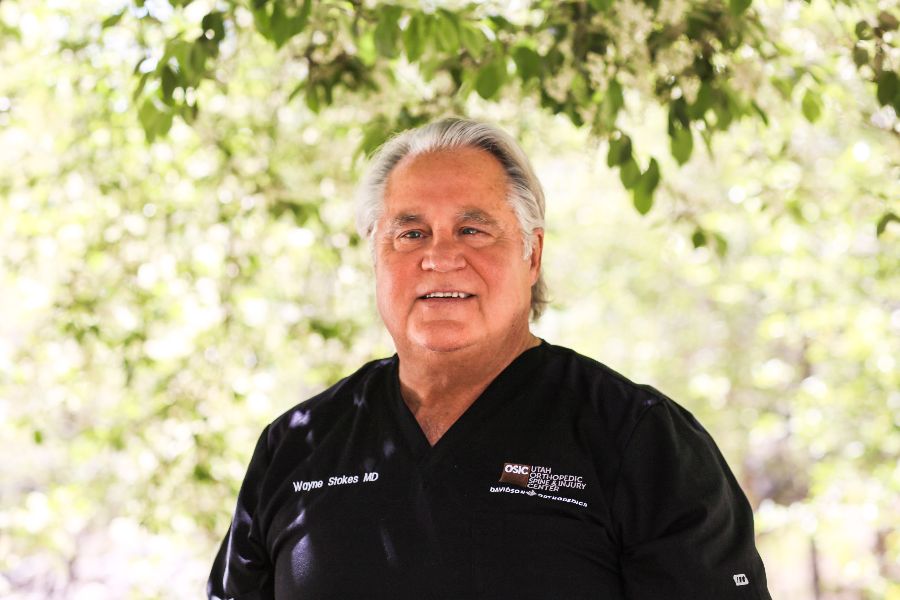
Dr. Wayne Stokes, M.D. Dr. Stokes has been in practice as a Physical Medicine and Rehabilitation (PM&R) physician, with a focus on the musculoskeletal system (issues with muscles, joints, and bones), for over 25 years. He has taught and trained medical students, Residents, and Fellows at Penn State, the University of Utah, and New York University Rusk Rehabilitation. Dr. Stokes spent 25 years performing fluoroscopic guided, diagnostic, and therapeutic lumbar injections. He holds current state medical licenses in New York and Utah.
Dr. Stokes is dual board-certified in PM&R and Sports Medicine. He is a Clinical Associate Professor at NYU Langone Health. Dr. Stokes is the former Director of Sports Medicine, Director of Sports Medicine Fellowship, and Director of Ultrasound and Musculoskeletal Education at NYU Langone Rusk Rehab. He currently is a medical provider at Utah Orthopedic Spine and Injury Center, focusing on injuries to the peripheral joints, lumbar and cervical spine, and regenerative medicine injection treatments.
Medical Specialists Providing Coordinated Care
We work as a physician-led team of specialists to provide the most comprehensive and complete recovery from injuries. We provide services ranging from immediate injury evaluation to complex sub-specialty surgical treatments. We provide both diagnostic and treatment services. We can arrange testing to include: MRI, CT scan, EMG, ultrasound, neurologic testing, and digital x-ray, among other necessary modalities. Our expertise is in both non-surgical and surgical care.
We provide complete surgical services, including surgical facility, anesthesia and implants. The care rendered in our clinic and our affiliated facilities is medically supervised to assure the best outcomes.
When Should I Refer A Patient to OSIC?
Early! We can provide comprehensive and coordinated care most effectively soon after the injury. Once a patient is out of the Emergency Room, or Urgent Care is the perfect time to send them to OSIC. We are also available to evaluate patients further out from the accident.
What Types of Injuries Do You Treat?
We treat both relatively minor and major complex injuries. We treat all bodily injuries and traumatic brain injuries. We have specialists in neurosurgery, neurology, spine, shoulder, elbow, hand/wrist, hip, knee, foot/ankle, physiatry, pain management, interventional spine, psychology, brain injury care, neuro-optometry, nutrition, life care planning and neuropsychology. When needed, we provide additional support care, including medical, cardiac, pulmonary, radiological, and infectious disease, among others.